// Venezuela Energy Briefing
Venezuela Energy Briefing — August 24, 2026
A short read on the past two weeks' developments in Venezuela's oil sector — what happened, and why it matters for the companies executing work on the ground. Company names in third-party coverage are attributed to the outlet; consistent with our site-wide policy, we do not name operators or counterparties in our own text.
The queue breaks open
Two weeks ago this briefing described an approvals desk where, eight months into the reopening, no new American deals had been finalized. That changed in Houston. On August 19, Houston Public Media reported that two Texas firms — an oilfield-services multinational and a Dallas-based independent producer — signed contracts with Venezuela's national oil company at an energy conference in the city, the first such agreements signed on U.S. soil under the current licensing framework, a day after Politico reported the signings were imminent. Venezuela came to sell: its oil minister used the same conference to pitch what she described as 916 exploration opportunities, 192 trillion cubic feet of gas, and more than 300 billion barrels of reserves — "an entire world waiting to be discovered," per Fortune's account.
Why it matters: the binding constraint we flagged in the last briefing — administrative throughput — is starting to give. Signed contracts are what turn licenses into field programs, and field programs into purchase orders: site preparation, equipment staging, logistics, crews. The signal for the execution layer is less the size of the reserve numbers pitched on stage and more the fact that signatures are now happening at all — each one seeds a procurement chain that reaches the ground within months, not years. (Source: Houston Public Media, August 19, 2026; Politico, August 18, 2026; Fortune, August 20, 2026.)
The pipes push back
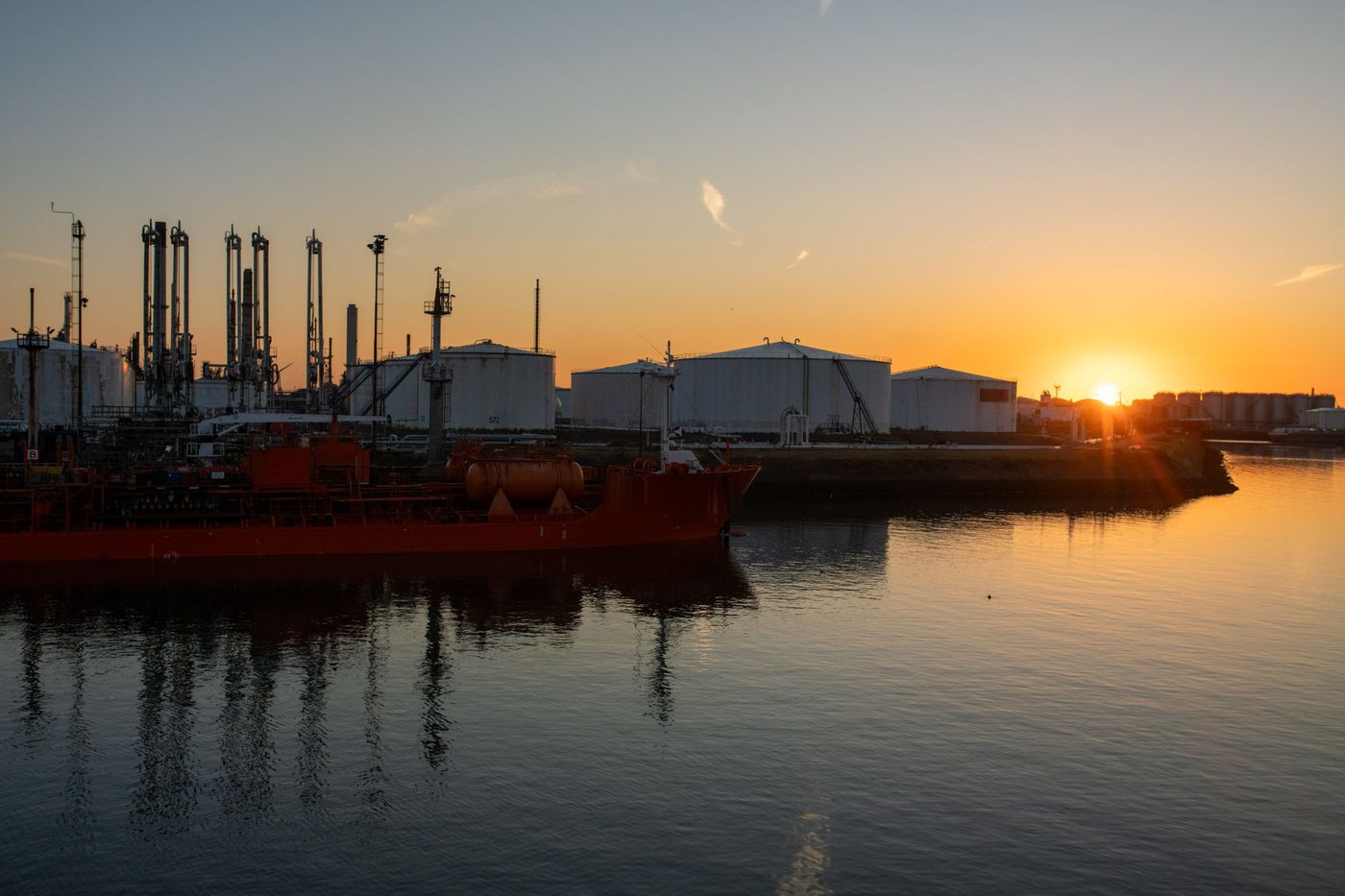
The demand side kept concentrating. A senior U.S. energy official told the same Houston conference that more than 500,000 barrels per day of Venezuela's roughly 1.25 million barrels of daily production now flow to U.S. refineries, Al Jazeera reported on August 19. But the physical system is straining to keep up: Reuters reported on August 21 that tankers are waiting up to thirty days to load at the terminal complex that handles about seventy percent of the country's exports — the state selling oil faster than its ports can move it, with the backlog now capping export growth.
Why it matters: the constraint is migrating from paperwork to infrastructure. For companies working the field, a thirty-day loading queue ripples backward — liftings slip, invoice liquidation slips with them, and the cash cycle behind a work order stretches accordingly. That is a risk short-cycle financing re-prices quickly, and it is also a procurement signal in its own right: congested terminals mean work on storage, marine services, and export logistics — a services market of its own forming at the water's edge. (Source: Al Jazeera, August 19, 2026; Reuters, August 21, 2026.)
The second wave digs in
The state-backed entrant this briefing tracked two weeks ago moved from a foothold to a stake. On August 16, Indian outlets reported that India's state-owned overseas producer has received a U.S. license to resume full operations in Venezuela — an upgrade from the initial authorization reported earlier this month — and is now seeking operatorship of the two fields where it holds joint-venture stakes, along with recovery of more than $500 million in accumulated dividends. Indian government trade data cited in the coverage shows the country's crude purchases from Venezuela rising steeply this fiscal year. The legal scaffolding thickened alongside: an August 18 analysis in the National Law Review notes the U.S. sanctions authority reaffirmed its recent Venezuela licenses and added a new general license, effective August 4, covering transactions in the national oil company's defaulted 2020 bonds.
Why it matters: operatorship is the deepest form of commitment a foreign participant can make — it means running the field, not just holding paper in it, and every operator transition re-tenders the procurement around that field. A second-wave entrant pressing for it, while the license stack fills in down to bond plumbing, reads as a market whose participants expect the rules to hold. For the execution layer, more operators with more autonomy means more distinct buyers of work — and less concentration risk in who issues the next purchase order. (Source: Business Standard, August 16, 2026; Devdiscourse, August 18, 2026; National Law Review, August 18, 2026.)
The read-through for the services layer
Two weeks, three signals: the deal queue that defined the summer is breaking open on U.S. soil, the bottleneck is migrating from approvals to port capacity, and the reopening's second wave is converting licenses into operating positions. Activity follows signatures, and signatures are accelerating — which puts the working-capital question in front of more contractors, sooner. For how that financing works in practice, see purchase order financing in Venezuela's oil sector; for the wider map of entry routes, investing in oil projects in Venezuela.